
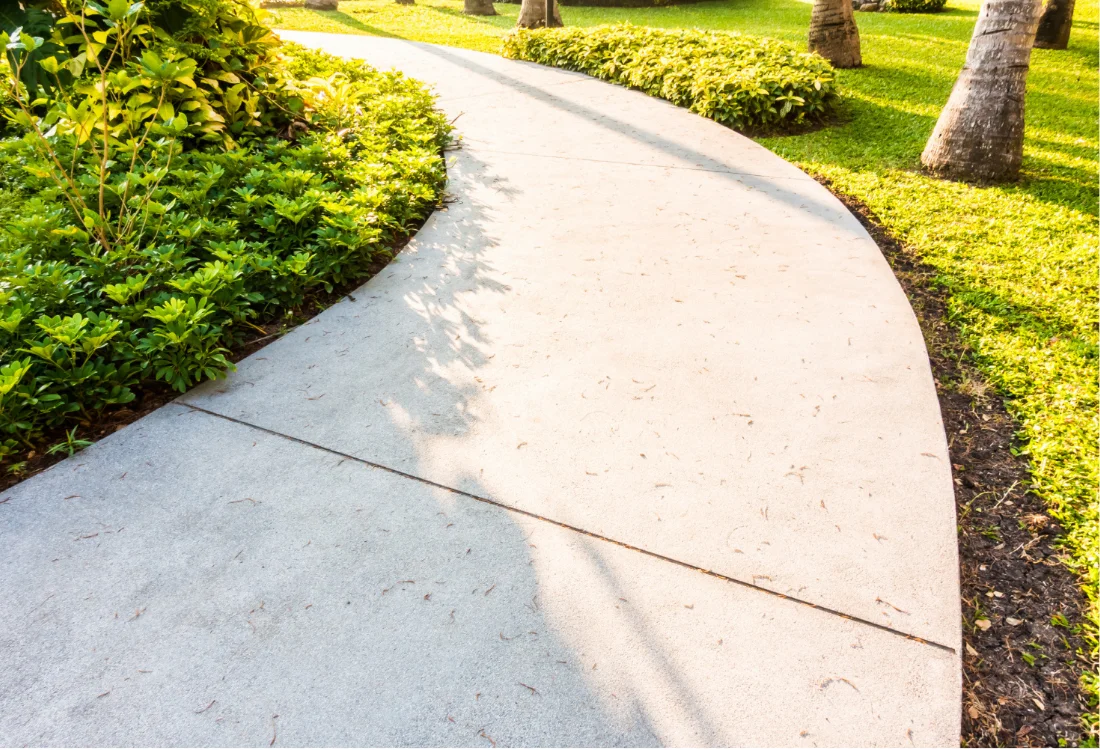
A half circle driveway for small yard spaces can create a welcoming entrance without making the property feel crowded. Unlike a full circular driveway, a half-circle or semi-circular layout works along the front of the house and can provide convenient vehicle access while using less land. The right design can improve curb appeal, simplify parking, and create a more organized transition between the street and your home. However, a small property requires careful planning because every foot of driveway space competes with landscaping, walkways, drainage areas, and usable outdoor space.
The best approach starts with the size and shape of your yard rather than with a particular driveway material or decorative style. You need to consider vehicle turning radius, property boundaries, driveway width, local regulations, existing trees, slopes, drainage, and pedestrian access before construction begins. A thoughtful design can make a compact front yard appear larger and more balanced. This guide explains how to plan a half circle driveway for small yard layouts, compare materials, estimate costs, avoid common mistakes, and choose a practical design that fits your property.
Key Takeaways
- A half-circle driveway can work well when a full circular driveway requires too much space.
- Small yards need careful attention to turning radius and driveway width.
- A practical layout should prioritize vehicle movement before decorative features.
- Asphalt, concrete, gravel, pavers, and permeable surfaces offer different benefits.
- Landscaping should frame the driveway without reducing usable driving space.
- Drainage planning matters because compact driveways can quickly direct water toward a home.
- Local driveway permits, setbacks, curb rules, and right-of-way requirements should be checked before construction.
- A semi-circular driveway can improve curb appeal while creating easier vehicle access.
- A scaled site plan can prevent expensive design mistakes.
- The most attractive design is usually the one that balances function, proportion, maintenance, and budget.
What Is a Half Circle Driveway?
A half circle driveway typically creates a curved access route that follows part of a circular or semicircular shape along the front of a property. Instead of forming a complete loop around a central island, the driveway usually connects two points near the street or property entrance. This configuration can provide a more convenient arrival and departure pattern than a single straight driveway.
Homeowners often choose this design when they want the visual appeal of a circular driveway but lack enough land for a full loop. The layout can also make the front of a house look more symmetrical when the curve follows the architecture of the property. On a compact lot, however, the curve needs careful scaling so the driveway does not dominate the entire yard.
Half Circle vs Full Circular Driveway
A full circular driveway generally requires considerable front-yard depth because vehicles need enough space to travel around a central landscaped area. A half-circle design can reduce that requirement by keeping the circulation pattern closer to the front edge of the property. This makes the layout more suitable for homeowners searching for a small circular driveway alternative.
The important difference involves more than appearance. A full loop can provide continuous one-way circulation, while a half-circle arrangement may require vehicles to enter and exit through separate points or use a larger curved section for turning. Before choosing either option, measure the available area and test how a vehicle will move through the proposed design.
| Feature | Half-Circle Driveway | Full Circular Driveway |
| Space requirement | Moderate | High |
| Small-yard suitability | Good with careful planning | Often limited |
| Curb appeal | High | Very high |
| Vehicle circulation | Good | Excellent |
| Landscaping area | Flexible | Central island often required |
| Construction complexity | Moderate | Higher |
| Best use | Compact front yards | Large front yards |
Can a Half Circle Driveway Work in a Small Yard?
Yes, but the design needs to match the dimensions of the property and the vehicles that will use it. A half circle driveway for small yard projects works best when the curve provides enough turning space without consuming most of the lawn. The driveway should support comfortable vehicle movement while preserving room for planting beds, pedestrian paths, and other essential features.
A compact property may benefit from a shallow semicircle rather than a dramatic sweeping curve. You can also reduce the visual impact by using narrow planting beds along the outer edge and keeping the driveway surface visually consistent with the house. The goal involves creating a driveway that feels proportional rather than simply trying to fit the largest possible curve.
When a Half Circle Makes Sense
A half-circle layout can make sense when your property has enough frontage for two driveway connections but limited depth for a complete circular loop. It can also work well when the house sits relatively close to the street and you want to create a more defined arrival area. Properties with broad frontages sometimes accommodate this style particularly well.
The layout can also help homeowners who regularly receive visitors or need more flexible vehicle access. Instead of forcing every vehicle to reverse into the street, the curved arrangement can provide additional maneuvering space. However, you should confirm that local authorities allow the proposed driveway entrances before finalizing the plan.
Minimum Space and Dimensions to Consider
Dimensions represent one of the most important parts of a half circle driveway for small yard design. The exact requirements vary according to local regulations, vehicle types, site conditions, and driveway configuration. A passenger car needs less maneuvering space than a large pickup truck, SUV, trailer, or delivery vehicle.
Instead of relying on a generic measurement found online, create a scaled drawing of your property. Mark the house, sidewalks, property lines, utilities, trees, street, and existing driveway before drawing the curve. Then test the turning path of the largest vehicle that will regularly use the driveway.
Driveway Width
Driveway width should provide enough room for comfortable vehicle movement while avoiding unnecessary pavement. A driveway that becomes too narrow around a curve can feel difficult to navigate, particularly when two vehicles meet. Conversely, excessive width can consume valuable lawn and make a small front yard look paved over.
The entrance points also deserve attention because vehicles need sufficient space to transition smoothly from the street into the curved driveway. Avoid creating abrupt angles where the driveway meets the road. A smooth connection can reduce tire stress, improve appearance, and make everyday driving easier.
Turning Radius
The turning radius determines how easily a vehicle can follow the curve. A passenger car can generally handle tighter turns than a long-wheelbase truck, but the exact path depends on the vehicle. If your household uses larger vehicles, plan around those dimensions rather than designing for a small sedan.
A useful planning method involves marking the proposed driveway with temporary stakes, cones, or landscape paint. Drive through the space if site conditions allow and observe where the vehicle approaches the edges. This practical test can reveal problems that a simple overhead drawing might miss.
| Planning Element | Why It Matters | Small-Yard Recommendation |
| Driveway width | Controls vehicle comfort | Use only the width needed for safe movement |
| Turning radius | Determines ease of navigation | Test with the largest regular vehicle |
| Frontage | Determines entry and exit options | Measure available street-facing space |
| Yard depth | Limits curve size | Favor compact, shallow curves when needed |
| Sidewalk location | Affects driveway connections | Preserve safe pedestrian movement |
| Property lines | Restrict construction | Confirm boundaries before work |
| Drainage | Prevents water problems | Include drainage in the initial design |
How to Plan a Half Circle Driveway for Small Yard Spaces
Good planning begins before you choose pavers, concrete colors, edging, or plants. Start by measuring the complete property and identifying every physical constraint. Include the front door, garage, existing trees, utility boxes, sidewalks, drainage paths, retaining walls, fences, and street access points.
Once you understand the site, draw several possible driveway configurations. Compare a shallow curve, a deeper semicircle, and a modified curved driveway with one primary entrance. This process lets you identify which design provides the best combination of vehicle access, lawn space, appearance, and construction practicality.
Measure the Property
Measure the frontage, depth, existing driveway, sidewalk, and distance between the house and street. Use these measurements to create a simple scaled plan. Even a basic drawing can help you recognize whether your preferred layout fits before you invest in materials.
Identify the Vehicle Path
Next, identify how vehicles will enter, travel along the curve, and leave. Consider both forward movement and potential reversing movements. A driveway may look perfect from above but feel uncomfortable when a vehicle actually follows the curve.
Mark Restrictions
Check property boundaries, utility locations, drainage routes, trees, street trees, sidewalk requirements, and local driveway regulations. These details can significantly influence where the driveway can go. Contact the relevant local authority or qualified professional when requirements remain unclear.
Select the Surface
Choose the surface after establishing the layout. Asphalt offers a relatively straightforward appearance, concrete provides a clean finished look, gravel can reduce upfront material costs, and pavers offer extensive design flexibility. Your choice should reflect traffic, climate, maintenance expectations, budget, and the architectural style of the home.
Add Landscaping
Only add landscaping after confirming that the vehicle path works. Use planting beds to define the curve rather than allowing plants to interfere with vehicle clearance. Low-growing plants, compact shrubs, ornamental grasses, and strategically placed trees can frame the driveway without overwhelming a small yard.
Best Layout Ideas for Compact Properties
A small yard driveway design does not have to look basic. You can create visual interest through curves, contrasting borders, planting beds, lighting, and changes in texture. The key involves using design elements that reinforce the driveway’s shape without taking away functional space.
Shallow Semicircle
A shallow semicircle creates the impression of a curved driveway while preserving more front-yard space. This approach works especially well when the house sits close to the street. The curve can remain broad enough for vehicle movement while avoiding an oversized paved area.
Offset Half Circle
An offset design moves the curve slightly toward one side of the property. This option can work when a house, mature tree, utility feature, or existing walkway prevents a symmetrical layout. Strategic landscaping can balance the composition and make the offset feel intentional.
Curved Driveway With Narrow Planting Beds
Narrow beds can follow the inside or outside edge of the driveway. These beds create a strong visual boundary and soften large areas of hardscape. Choose plants according to the property’s sunlight, soil, climate, irrigation needs, and maintenance expectations.
Half Circle With Paver Border
A contrasting paver border can define the curve without requiring decorative landscaping throughout the entire yard. The border can also provide a visual transition between the driveway and lawn. Keep the pattern simple because excessive detailing can make a compact property feel visually busy.
One-Side Landscape Focus
You do not need to landscape both sides of the driveway equally. A stronger planting bed on one side can create asymmetry while preserving more open lawn. This technique works particularly well on narrow lots where symmetrical landscaping would consume too much space.
Choosing the Right Driveway Material
Material selection influences appearance, durability, maintenance, drainage, and total project cost. The best material for a half circle driveway for small yard depends on the home’s style and how much traffic the surface receives. Curved designs can also affect installation difficulty because some materials adapt to curves more easily than others.
Concrete
Concrete creates a clean and durable surface that works well with modern, traditional, and transitional homes. You can use standard gray concrete for a simple appearance or choose decorative finishes when the budget allows. Proper base preparation, joint planning, drainage, and installation quality strongly affect long-term performance.
Asphalt
Asphalt provides a practical surface with a relatively simple visual character. It can suit homeowners who prioritize function over decorative detail. The curve should receive careful attention during installation because poor grading or an inconsistent edge can become especially noticeable on a curved driveway.
Gravel
Gravel can work well for homeowners who want a more informal or rustic appearance. It can also offer flexibility for some driveway configurations, although loose material can migrate into lawns and sidewalks. Regular raking, replenishment, and edge maintenance may become necessary.
Pavers
Pavers provide excellent design flexibility and can create attractive borders, patterns, and curved edges. They can complement brick, stone, stucco, or other architectural materials around the house. Installation generally requires careful base preparation and accurate placement, which can increase project costs.
Permeable Driveway Materials
Permeable systems can help manage stormwater by allowing water to move through the surface and underlying layers. They may work particularly well where drainage presents a significant concern. However, performance depends on appropriate design, soil conditions, installation, and ongoing maintenance.
| Material | Appearance | Maintenance | Curve Flexibility | Relative Cost |
| Concrete | Clean and versatile | Low to moderate | Good | Medium |
| Asphalt | Simple and practical | Moderate | Good | Low to medium |
| Gravel | Casual and natural | Moderate to high | Excellent | Low |
| Pavers | Premium and decorative | Moderate | Excellent | Medium to high |
| Permeable paving | Modern and functional | Moderate | Good | Medium to high |
Landscaping Ideas for a Small Half Circle Driveway
Landscaping can transform a functional driveway into a strong focal point. However, a small property requires restraint because too many plants, borders, stones, or ornaments can make the area look cluttered. The best half circle driveway landscaping ideas usually emphasize the curve while keeping the sightlines open.
Choose plants that suit the local growing conditions and require maintenance levels you can realistically manage. Avoid placing tall plants directly beside driveway entrances where they could obstruct visibility. Keep mature plant size in mind because a shrub that looks small at installation can eventually narrow the driving path.
Use Repetition
Repeating a small group of plants creates visual continuity around the curve. You might repeat ornamental grasses, low shrubs, groundcovers, or flowering plants at measured intervals. Repetition often looks more polished than using many unrelated species.
Frame the Entrance
The two driveway entrances can create natural focal points. Low planting clusters or modest landscape features can visually mark those locations without blocking visibility. Keep entrance landscaping clear enough for drivers to see pedestrians and approaching traffic.
Keep the Center Open
If your half-circle creates an interior landscape area, avoid filling it with too many features. A simple lawn, low groundcover, mulch bed, or restrained planting arrangement can make the space feel larger. Open space also helps the curve remain visually obvious.
Add Lighting Carefully
Low-level pathway or landscape lighting can improve nighttime visibility and highlight the driveway’s shape. Position fixtures so they do not create glare for drivers. Use lighting as an accent rather than covering every edge with fixtures.
Half Circle Driveway Cost Factors
The cost of a half circle driveway for small yard projects varies significantly based on size, material, excavation, grading, drainage, labor, local market conditions, and site accessibility. A small driveway does not automatically produce a low-cost project because curved edges can require additional preparation and skilled installation.
The most useful approach involves requesting itemized estimates rather than relying on one general price. Ask contractors to separate excavation, base preparation, drainage, surface material, edging, labor, permits, and landscaping. This breakdown makes it easier to compare quotes accurately.
What Influences the Price?
Several factors can increase the project budget:
- Removal of an existing driveway
- Extensive excavation
- Poor soil conditions
- Sloped or uneven terrain
- Drainage improvements
- Retaining walls
- Premium pavers
- Decorative borders
- Complex curves
- Additional driveway entrances
- Utility relocation
- Permit or inspection requirements
- Difficult access for construction equipment
A simple design with standard materials can reduce costs. However, reducing the budget should not mean eliminating proper base preparation or drainage. Saving money on hidden structural components can create expensive repairs later.
| Cost Factor | Lower-Cost Approach | Higher-Cost Approach |
| Surface | Gravel or basic asphalt | Premium pavers |
| Shape | Simple shallow curve | Complex multi-radius design |
| Landscaping | Lawn and basic beds | Extensive planting and hardscape |
| Drainage | Existing adequate grading | New drainage system |
| Edging | Simple edge | Decorative stone or paver edging |
| Site preparation | Minimal | Extensive excavation or grading |
| Lighting | Minimal fixtures | Integrated landscape lighting |
Advantages and Disadvantages of a Half Circle Driveway
A half-circle driveway can deliver several practical and visual benefits, but it does not suit every property. Understanding the advantages and limitations before construction can help you avoid designing a driveway that looks attractive but performs poorly.
Advantages
- Provides a distinctive arrival experience.
- Can improve front-yard curb appeal.
- May allow easier vehicle circulation.
- Can offer more flexible parking access.
- Works as an alternative to a full circular driveway.
- Can complement symmetrical home architecture.
- Creates opportunities for landscaping around the curve.
- Can reduce reversing requirements in some layouts.
- Offers multiple material and design options.
Disadvantages
- Requires more space than a basic straight driveway.
- Can cost more than a simple driveway.
- Curved construction can require careful measurement.
- Poorly designed curves can become difficult to navigate.
- Additional street access points may face local restrictions.
- More pavement can reduce lawn or planting space.
- Drainage must receive careful attention.
- Decorative landscaping can reduce usable clearance if oversized.
| Pros | Cons |
| Strong curb appeal | Requires additional space |
| Flexible vehicle access | Higher cost than basic layouts |
| Good alternative to full circle | More complex planning |
| Many material choices | Can reduce lawn area |
| Works with varied architectural styles | Drainage requires attention |
| Landscaping opportunities | Poor curves can hurt usability |
Half Circle vs Other Small-Yard Driveways
A half circle driveway for small yard properties competes with several other configurations. A straight driveway generally uses the least space, while a full circular driveway provides the greatest circulation but demands more land. A turnaround driveway can sit somewhere between these options depending on its shape.
Your decision should come from how you use the property rather than from appearance alone. If you rarely have visitors and only need one or two parking spaces, a simple driveway may offer better value. If you regularly host guests or need easier vehicle circulation, the additional space used by a curved design may justify the investment.
| Driveway Type | Space Need | Vehicle Convenience | Curb Appeal | Small-Yard Suitability |
| Straight | Low | Moderate | Moderate | Excellent |
| Side-entry | Moderate | High | High | Good |
| Half circle | Moderate | High | High | Good |
| Circular | High | Very high | Very high | Limited |
| Turnaround | Moderate to high | High | High | Depends on site |
Common Design Mistakes to Avoid
One of the most common mistakes involves designing the driveway based solely on how it looks from the street. A beautiful curve can become frustrating when vehicles cannot follow it comfortably. Always test the actual movement of your largest regular vehicle before finalizing the dimensions.
Another mistake involves using too much pavement. Small yards can quickly lose their sense of openness when the driveway becomes excessively wide or deep. A compact layout should use the minimum practical paved area while preserving comfortable vehicle access.
Ignoring the Largest Vehicle
Designing for a small sedan can create problems if the household owns a pickup truck or SUV. Measure the vehicle that needs the most maneuvering space. Build your turning path around realistic daily use.
Forgetting Pedestrian Movement
The driveway should work with the front walkway rather than forcing pedestrians into awkward paths. Consider how children, guests, deliveries, and residents will move between the street, driveway, garage, and front entrance. A safe pedestrian route should remain obvious.
Planting Too Close to the Curve
Plants can quickly encroach on a narrow driveway. Always consider the mature size of shrubs and trees rather than their installation size. Keep growth away from sightlines, vehicle mirrors, and turning areas.
Neglecting Drainage
Water can collect on driveways when grading does not direct runoff appropriately. Poor drainage can damage pavement, erode landscaping, or move water toward the foundation. Plan surface slopes and drainage features as part of the driveway design rather than as an afterthought.
Skipping Local Requirements
Driveway entrances often interact with public sidewalks, curbs, streets, drainage systems, and right-of-way areas. Local rules can determine where and how you can build. Verify applicable requirements before ordering materials or beginning construction.
Drainage, Safety, and Maintenance
A well-designed driveway should manage water while providing safe vehicle and pedestrian movement. The surface needs appropriate grading so rainfall does not collect in low areas. Depending on the property, the design may also require channels, drains, swales, permeable surfaces, or other stormwater-management measures.
Safety also depends on visibility. Avoid tall shrubs, walls, decorative structures, or trees that block views near driveway entrances. Lighting can help after dark, but it should complement rather than replace clear sightlines.
Maintenance requirements depend heavily on the chosen material. Gravel may need periodic redistribution, asphalt can eventually require sealing or repairs, concrete may develop cracks, and pavers can sometimes shift or require joint maintenance. Choose the material according to how much maintenance you realistically want to perform.
Expert Tips for a Better Small-Yard Driveway
A successful compact driveway balances four priorities: function, proportion, drainage, and appearance. If one of these elements dominates the design, the finished result can feel impractical. For example, an oversized decorative driveway may provide impressive curb appeal but leave too little space for lawn and pedestrian circulation.
The following expert practices can improve the planning process:
- Start with a measured site plan. Never estimate available space by eye alone.
- Design around vehicle movement first. Decorative elements should come later.
- Test the curve physically. Use temporary markers before excavation.
- Plan drainage early. Do not wait until after surface installation.
- Keep landscaping proportional. Small yards benefit from restraint.
- Consider mature plant sizes. Avoid future driveway clearance problems.
- Use material transitions strategically. Borders can define curves without excessive decoration.
- Compare several contractor estimates. Review the scope, not just the final price.
- Check local regulations. Confirm driveway access and setback requirements before construction.
- Think about long-term maintenance. Choose a surface you can maintain comfortably.
Make the Driveway Look Larger
A small property can sometimes appear more spacious when the driveway design uses consistent lines and restrained landscaping. Avoid excessive visual segmentation because too many contrasting surfaces can make the yard appear fragmented. A simple material palette often creates a stronger sense of continuity.
You can also use low planting and open sightlines to maintain visual depth. Light-colored surfaces may create a different visual impression from dark surfaces, while narrow borders can emphasize the curve without consuming substantial space. The goal should be visual balance rather than making the driveway physically larger than necessary.
Practical Planning Checklist
Use this checklist before starting a half circle driveway for small yard project:
| Planning Task | Completed? |
| Measure property frontage | ☐ |
| Measure available yard depth | ☐ |
| Locate property boundaries | ☐ |
| Identify utilities | ☐ |
| Check sidewalk location | ☐ |
| Identify existing drainage paths | ☐ |
| Measure largest regular vehicle | ☐ |
| Test the turning path | ☐ |
| Compare driveway layouts | ☐ |
| Select surface material | ☐ |
| Plan driveway grading | ☐ |
| Plan drainage | ☐ |
| Choose landscaping | ☐ |
| Check local regulations | ☐ |
| Request detailed estimates | ☐ |
| Plan long-term maintenance | ☐ |
Questions to Ask a Driveway Contractor
Before hiring a contractor, ask specific questions about the construction process. Find out how the contractor plans to prepare the base, manage drainage, establish the curve, and handle the driveway’s connection to the street. A professional quote should explain the major work rather than simply provide one unexplained total.
Ask whether the estimate includes demolition, excavation, base material, grading, surface installation, edging, drainage, cleanup, and applicable permits. You should also ask about expected maintenance and repair requirements. Clear answers make contractor comparisons much easier.
Conclusion
A half circle driveway for small yard spaces can provide an excellent balance between curb appeal, vehicle access, and efficient use of limited land. The most successful designs do not simply copy large circular driveways on a smaller scale. Instead, they adapt the curve to the property’s actual frontage, depth, vehicle requirements, pedestrian routes, drainage conditions, and architectural style.
Start with measurements and vehicle movement before selecting materials or landscaping. Compare practical options such as concrete, asphalt, gravel, pavers, and permeable surfaces based on durability, maintenance, appearance, and budget. Keep planting beds proportional, protect visibility around entrances, and make drainage part of the initial design rather than a later repair.
Ultimately, the best small-yard driveway is not necessarily the largest or most decorative option. A carefully scaled semicircular layout can create a polished entrance while preserving valuable outdoor space. If you test the design, verify local requirements, plan drainage, and choose materials based on long-term needs, your half circle driveway for small yard can remain attractive, functional, and practical for years.
Short FAQs
1. Can a half circle driveway work in a small yard?
Yes. A properly scaled half-circle driveway can provide easy vehicle access while preserving valuable yard space.
2. What is the best material for a small half circle driveway?
Concrete, asphalt, gravel, and pavers can all work. Choose based on budget, maintenance, durability, and appearance.
3. How much space does a half circle driveway need?
The required space depends on your yard size, driveway width, vehicle type, and turning radius. Always measure before construction.
4. Is a half circle driveway cheaper than a full circle?
Usually, yes. It generally requires less space and material than a complete circular driveway.
5. How can I landscape a small half circle driveway?
Use low-growing plants, narrow planting beds, simple borders, and open sightlines to keep the yard attractive without making it feel crowded.