
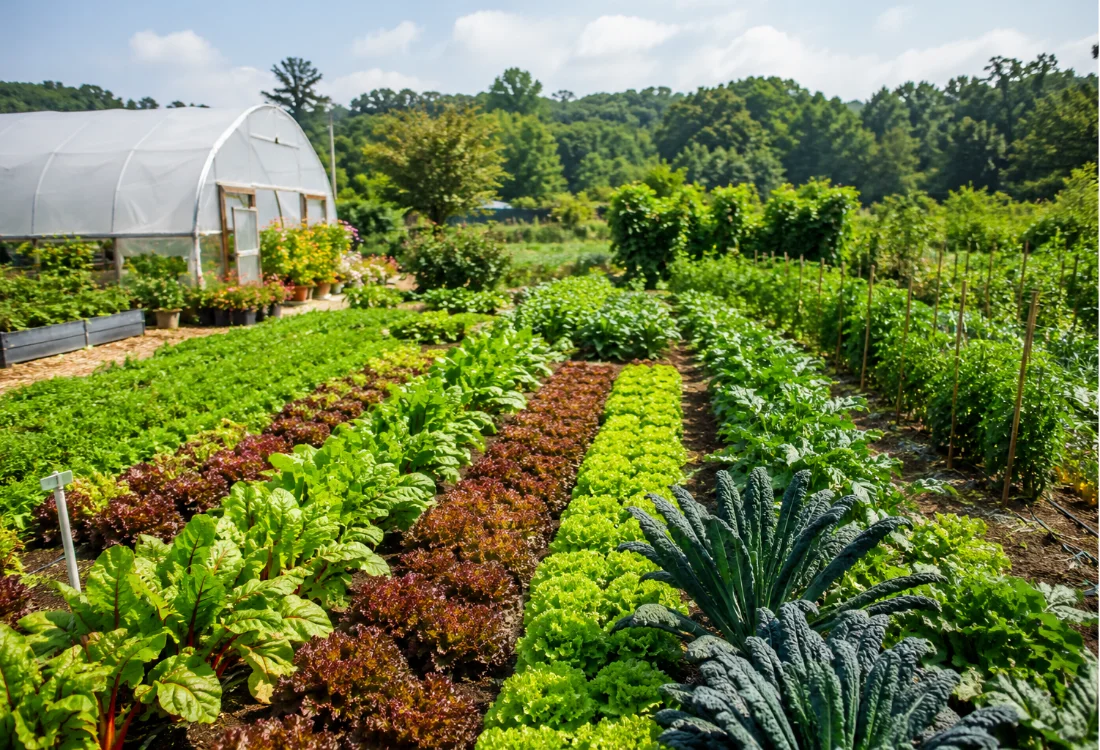
Understanding the market gardening AP Human Geography definition becomes much easier when you connect the term to one simple idea: farmers grow valuable, often perishable crops for sale in nearby markets. Market gardening is a form of intensive commercial agriculture that commonly produces fruits, vegetables, flowers, and other high-value crops on relatively small areas of land. Farmers use significant labor, capital, management, and other inputs to produce high yields and deliver products to consumers efficiently. The location of these farms also matters because fresh produce can lose value when transportation takes too long.
In AP Human Geography, market gardening matters because it connects several important Unit 5 concepts. These include intensive agriculture, commercial agriculture, urban markets, transportation costs, perishability, land value, bid-rent theory, and the von Thünen model. Once you understand these relationships, you can answer definition questions and explain why market gardening tends to occur near population centers. The concept also provides an excellent example of how economic forces influence agricultural land-use patterns.
Key Takeaways
- Market gardening is an intensive commercial farming practice.
- Farmers primarily grow fruits, vegetables, flowers, herbs, and other high-value crops.
- Farmers generally produce crops for sale rather than primarily for household consumption.
- Market gardens often operate near cities or other large consumer markets.
- Perishable products create pressure to reduce transportation time and costs.
- Market gardening can require substantial labor and careful crop management.
- It fits closely with the first agricultural ring in the traditional von Thünen model.
- High land values near cities encourage farmers to generate high returns from relatively small areas.
- Market gardening differs from extensive agriculture because it concentrates inputs on smaller areas.
- On the AP Human Geography exam, connect market gardening with intensive commercial agriculture, proximity to markets, perishability, and transportation costs.
What Is the Market Gardening AP Human Geography Definition?
The market gardening AP Human Geography definition can be summarized as intensive commercial agriculture that grows fruits, vegetables, flowers, and similar high-value crops for sale, often near urban markets. Farmers usually grow these products on relatively small areas of land and invest considerable labor and resources into producing high yields. The purpose is commercial rather than primarily subsistence-based, meaning farmers grow crops to generate income through markets. Market gardening therefore combines the concepts of commercial production and intensive land use.
The word “market” is important because it describes the economic purpose of the farming system. A household garden that produces vegetables only for family consumption does not automatically qualify as market gardening in the AP Human Geography sense. A farm that grows tomatoes, lettuce, berries, peppers, herbs, or flowers specifically for sale to consumers, restaurants, retailers, or other buyers better illustrates the concept. The farm may sell through farmers markets, roadside stands, local stores, restaurants, wholesalers, or other distribution channels.
Simple Definition for Students
If you need a short answer for an exam, remember this:
Market gardening is intensive commercial farming that produces high-value, often perishable crops for sale, commonly near urban markets.
That definition contains several important AP Human Geography ideas. “Intensive” refers to the concentration of inputs and production on relatively small areas of land, while “commercial” means farmers produce primarily for sale. “Perishable” explains why transportation and location matter so much, while “urban markets” explains why these farms often locate near population centers.
Market Gardening at a Glance
| Feature | Market Gardening |
| Farming type | Intensive commercial agriculture |
| Main purpose | Produce crops for sale |
| Typical scale | Relatively small or specialized farms |
| Common crops | Fruits, vegetables, herbs, flowers |
| Labor | Relatively high |
| Land use | Intensive |
| Market relationship | Strong connection to nearby consumers |
| Important geographic factor | Distance from market |
| Key AP concept | von Thünen model |
| Main concern | Freshness, transport, profitability |
Why Is Market Gardening Intensive Agriculture?
Market gardening falls under intensive agriculture because farmers concentrate significant inputs and management on a limited amount of land. Intensive agriculture seeks to obtain high production from a given area rather than simply spreading production across very large expanses of land. Market gardeners may use frequent planting, irrigation, fertilizers, pest management, protected growing structures, specialized equipment, and substantial human labor. The exact methods vary by farm, climate, crop, and technology, but the central idea remains high-value production from limited land.
This distinction becomes especially important in AP Human Geography because students often confuse intensive agriculture with commercial agriculture. These terms describe different characteristics of farming. “Commercial” describes the purpose of production, while “intensive” describes the way farmers use land and inputs. Market gardening can therefore be described accurately using both terms: it is commercial because farmers sell the output and intensive because they concentrate inputs and production on relatively limited land.
Intensive vs. Extensive Agriculture
| Factor | Intensive Agriculture | Extensive Agriculture |
| Land area | Usually smaller or more concentrated | Usually larger |
| Inputs per unit of land | High | Lower |
| Labor per unit of land | Often high | Often lower |
| Main objective | High yield per unit of land | Production across large areas |
| Examples in APHG | Market gardening, plantations, mixed crop/livestock | Ranching, nomadic herding, shifting cultivation |
| Typical relationship | High investment per acre | Large land requirement |
AP Human Geography identifies market gardening as one of the important intensive agricultural practices. Plantation agriculture and mixed crop/livestock farming also fall within the intensive category in the course framework. Extensive practices include shifting cultivation, nomadic herding, and ranching.
Why Does Market Gardening Occur Near Cities?
Location provides one of the strongest explanations for the market gardening AP Human Geography definition. Farmers often place market gardens close to urban areas because fresh fruits and vegetables can be highly perishable. A shorter distance to consumers can reduce transportation time and help farmers deliver products while they retain quality and market value. Proximity can also reduce some transportation costs and make frequent deliveries more practical.
Urban areas create strong consumer demand for fresh food. A large population provides many potential buyers, including households, restaurants, grocery stores, schools, hotels, and food businesses. Farmers who locate within reasonable reach of these markets can respond quickly to local demand and deliver fresh products without depending entirely on long-distance supply chains. This relationship between production and consumption makes market gardening an excellent example of how human geography studies the spatial organization of economic activities.
The Role of Perishability
Perishability means that a product can lose quality or value relatively quickly. Fresh lettuce, berries, leafy greens, flowers, and some other crops generally require more careful handling and faster movement than durable products such as wheat or dried grains. Farmers therefore consider transportation time when choosing where to produce and sell these goods. The more important freshness becomes, the greater the potential value of locating production close to the consumer.
Transportation Costs Matter
Transportation involves more than the distance shown on a map. Farmers must consider fuel, labor, vehicle expenses, refrigeration, packaging, loading, unloading, road conditions, and delivery time. A farm located close to its market may have an advantage when selling products that require rapid delivery. However, modern transportation and refrigeration can weaken the importance of distance compared with the conditions faced by farmers in earlier periods.
Market Gardening and the von Thünen Model
The von Thünen model is one of the most important concepts for understanding agricultural land-use patterns in AP Human Geography. Johann Heinrich von Thünen developed a model that explains how agricultural activities can arrange themselves around a central market according to factors such as distance, transportation costs, land costs, and agricultural profitability. In the traditional model, activities that produce highly perishable or valuable goods and require intensive production tend to occur closer to the central market.
Market gardening fits this logic particularly well. Fruits, vegetables, flowers, and other fresh products may need to reach consumers quickly, so farmers benefit from reducing the distance between their farms and markets. At the same time, land near a city tends to have greater economic value because many competing activities want access to the urban market. Farmers therefore need to generate enough revenue from their land to justify its cost.
Traditional von Thünen Rings
| Ring | Typical Agricultural Activity | Main Geographic Logic |
| First | Dairy and market gardening | Perishable products and high-value intensive production |
| Second | Forestry | Transportation costs make proximity important |
| Third | Grain and field crops | Less perishable and generally more extensive |
| Fourth | Ranching and livestock | Large land requirements and lower land costs farther away |
The traditional model places dairying and market gardening closest to the central market. Forestry follows in the next ring, followed by grain and field crops, while ranching and livestock occupy the outer area in the simplified model.
Why the Model Works
The basic logic is easy to remember. Products that spoil quickly or require frequent transportation benefit from being close to the market. Activities that need large areas of inexpensive land can move farther away from the city. The model therefore connects distance, transportation costs, land value, and agricultural intensity into one geographic explanation.
Why the Model Is Not Perfect
Students should not treat von Thünen’s model as an exact map of every agricultural region. Real landscapes include highways, airports, railroads, refrigeration systems, government policies, irrigation, specialized climates, technological changes, land ownership patterns, and global markets. These factors can cause actual agricultural patterns to differ considerably from the model’s neat concentric rings. The model remains valuable because it provides a framework for explaining why distance and transportation costs influence agricultural land use.
Market Gardening vs. Other Agricultural Systems
Understanding the market gardening AP Human Geography definition becomes easier when you compare it with related agricultural practices. Market gardening is commercial and intensive, while other agricultural systems may be commercial, subsistence-based, intensive, or extensive. Students should identify the specific characteristic that a question emphasizes before choosing an answer.
| Agricultural System | Main Purpose | Land Use | Common Products | Key Idea |
| Market gardening | Commercial | Intensive | Fruits, vegetables, flowers | Fresh produce near markets |
| Plantation agriculture | Commercial | Intensive | Coffee, sugar, bananas, other cash crops | Large estates and export crops |
| Mixed crop/livestock | Commercial | Intensive | Crops and livestock | Integrated production |
| Ranching | Commercial | Extensive | Cattle, sheep, other livestock | Large land areas |
| Shifting cultivation | Mostly subsistence | Extensive | Various food crops | Relocation after soil fertility declines |
| Nomadic herding | Mostly subsistence | Extensive | Livestock | Seasonal movement |
Market Gardening vs. Plantation Agriculture
Both systems can fall under intensive commercial agriculture, but they operate differently. Market gardening commonly focuses on fruits, vegetables, flowers, and similar products for nearby or regional consumers. Plantation agriculture generally involves large estates that specialize in particular cash crops, often in tropical or subtropical areas, and may connect strongly to export markets.
Market Gardening vs. Ranching
Ranching represents an important contrast with market gardening. Ranchers generally require large amounts of land for livestock, making inexpensive land more important than proximity to a city. Market gardeners instead seek high returns from relatively small areas and often benefit from being closer to consumer markets. This contrast demonstrates why intensive and extensive agriculture appear in different locations.
Characteristics of Market Gardening
Several characteristics help identify market gardening in an AP Human Geography question. The first is commercial production, because farmers grow products primarily for sale rather than solely for household consumption. The second is intensive land use, because farmers seek substantial production from relatively limited areas. The third is a strong relationship with markets, especially where consumers value fresh and perishable products.
Market gardening also tends to involve crop diversity. Instead of relying entirely on one broad-acre commodity, growers may produce multiple fruits, vegetables, herbs, flowers, or specialty crops. This diversity can allow farmers to serve different consumer demands and spread some production risk across multiple products. However, the exact crop mix depends heavily on local climate, soil, water availability, consumer demand, and business conditions.
Common Characteristics Checklist
A farming operation is more likely to represent market gardening when it has several of these features:
- Small or relatively limited production area
- Intensive use of land
- High-value crops
- Fruits and vegetables
- Flowers or herbs
- Commercial production
- Strong labor requirements
- Close connection to consumers
- Short or moderate transportation distances
- Fresh or perishable products
- Urban or suburban market access
- High returns expected from each unit of land
Common Market Gardening Crops
Market gardening commonly focuses on products that consumers purchase fresh and that can generate substantial value from limited land. Vegetables such as lettuce, tomatoes, peppers, cucumbers, carrots, and leafy greens can fit the model. Fruits, herbs, flowers, and specialty crops can also qualify when farmers grow them commercially using intensive production methods.
The crop itself does not automatically determine whether an operation qualifies as market gardening. Location, scale, production methods, and the relationship between the farm and the market also matter. For example, a crop grown primarily for household consumption represents a different agricultural purpose than the same crop grown commercially for urban consumers.
| Crop Category | Examples | Why It Can Fit Market Gardening |
| Vegetables | Lettuce, tomatoes, peppers | Fresh demand and relatively high value |
| Fruits | Berries, apples, peaches | Consumer demand and potential perishability |
| Herbs | Basil, mint, cilantro | High value from limited land |
| Flowers | Cut flowers, ornamental plants | High value and market-oriented |
| Specialty crops | Microgreens, specialty greens | Premium markets and intensive production |
Advantages of Market Gardening
Market gardening can provide important economic advantages because it allows farmers to focus on products that can generate significant revenue from limited land. High-value crops can make intensive land use economically practical, particularly where land prices are high. Proximity to urban consumers can also create opportunities for direct sales and shorter supply chains. These features can strengthen relationships between producers and consumers.
Another advantage involves flexibility. A diversified grower can adjust crop choices according to seasonal demand, local preferences, and market opportunities. Farmers may sell through multiple channels instead of depending on one commodity buyer. This flexibility does not eliminate financial risk, but it can give smaller producers more opportunities to respond to changing conditions.
Benefits Overview
| Benefit | Explanation |
| High value per acre | Farmers can generate substantial revenue from limited land |
| Freshness | Shorter delivery distances can support fresh products |
| Urban access | Large consumer populations create demand |
| Crop diversity | Multiple crops can serve different markets |
| Direct sales | Farmers can sell through local markets and other channels |
| Intensive production | High output can come from relatively small areas |
| Local economic activity | Farms can support jobs and local food businesses |
Disadvantages and Challenges
The same characteristics that make market gardening attractive can also create challenges. Intensive production can require substantial labor, water, capital, management, and technical knowledge. Farmers also face weather risks, pests, plant diseases, fluctuating consumer demand, and changing input costs. Because many products are perishable, poor timing or transportation problems can quickly reduce their value.
Land costs can create another major challenge. Areas close to cities may offer excellent access to consumers but also experience intense competition for land. Residential development, commercial construction, roads, and other urban uses can make agricultural land increasingly expensive. Farmers must therefore generate sufficient returns to compete with alternative uses of land.
| Potential Advantage | Potential Disadvantage |
| Close access to consumers | High land costs near cities |
| Fresh produce | Perishability |
| High-value crops | Strong market competition |
| Intensive yields | High input requirements |
| Direct marketing opportunities | Requires business and marketing skills |
| Crop diversity | More complex farm management |
Real-World Examples and Applications
A useful example would be a vegetable farm located on the edge of a large metropolitan region. The farm could grow leafy greens, tomatoes, peppers, herbs, and other fresh crops and then sell them to nearby restaurants, grocery stores, farmers markets, and consumers. The farm benefits from access to a large customer base while reducing the time required to transport perishable goods. This example captures the geographic relationship at the center of market gardening.
Another example could involve a flower grower operating near a major city. Flowers can have high value relative to the amount of land required, but freshness and appearance can strongly influence their market value. A location close to consumers, retailers, event businesses, or distribution facilities can therefore create an economic advantage. This example shows that market gardening extends beyond vegetables and includes other commercially valuable horticultural products.
Market Gardening and Urbanization
Urbanization influences market gardening because cities create concentrated consumer markets. As populations become increasingly urban, demand for fresh food can create opportunities for agricultural producers located around metropolitan areas. At the same time, expanding cities can place pressure on agricultural land through development and rising land values. This creates a geographic competition between farming and other land uses.
The relationship between agriculture and cities therefore works in both directions. Urban populations create demand that can support market gardening, but urban expansion can also reduce the amount of available farmland. Farmers must balance market access against land costs, zoning rules, transportation networks, water availability, and other local conditions. Human geography examines these interactions because they show how economic activities shape landscapes and how landscapes influence economic decisions.
Common AP Human Geography Exam Mistakes
One common mistake is defining market gardening simply as “growing vegetables.” That definition misses the commercial and intensive components of the concept. A personal vegetable garden may produce vegetables, but it does not necessarily represent commercial market gardening. AP questions often require students to recognize the economic purpose and geographic organization of production.
Another mistake involves confusing commercial agriculture with intensive agriculture. A farm can be commercial without being intensive, just as agriculture can be intensive without being primarily commercial. Ranching, for example, can be commercial but extensive, while certain forms of intensive farming may support subsistence needs. Keeping these classifications separate will help you avoid incorrect answers.
Mistakes to Avoid
- Do not define market gardening as subsistence farming.
- Do not assume every vegetable garden qualifies as market gardening.
- Do not confuse intensive with commercial.
- Do not forget the importance of market proximity.
- Do not ignore perishability and transportation costs.
- Do not assume the von Thünen model perfectly represents every real landscape.
- Do not describe market gardening as extensive agriculture.
How to Answer a Market Gardening FRQ
When an AP Human Geography free-response question asks you to explain market gardening, begin with a precise definition. Then connect the definition to at least one geographic process, such as transportation costs, perishability, land value, or proximity to consumers. A strong response does more than name the practice because it explains why farmers choose particular locations and production methods.
For example, a strong response could state that market gardening is intensive commercial agriculture involving high-value fruits, vegetables, or flowers. The response could then explain that farmers often locate near urban markets because perishable products benefit from shorter transportation distances. Finally, the answer could connect this pattern to von Thünen’s model, which places market gardening near central markets because transportation costs and perishability influence agricultural location.
FRQ Answer Formula
Use this simple structure:
Definition → Characteristic → Geographic reason → Model or concept
For example:
Market gardening is intensive commercial agriculture that produces fruits and vegetables for sale. Farmers often locate near urban markets because perishable products need efficient transportation to consumers. This pattern fits the von Thünen model, which explains how distance from markets and transportation costs influence agricultural land use.
This format works because it directly answers the question and connects multiple AP Human Geography concepts.
Expert Study Tips
The easiest way to remember the market gardening AP Human Geography definition is to associate four words with it: intensive, commercial, perishable, nearby. Intensive tells you how farmers use land. Commercial tells you why farmers produce the crops. Perishable explains why transportation matters. Nearby reminds you of the relationship between farms and urban markets.
You should also practice distinguishing market gardening from the other major agricultural practices in Unit 5. If you see small-scale or concentrated production of fresh fruits and vegetables for sale near an urban market, market gardening should immediately come to mind. If you see massive land areas devoted to livestock, think about ranching instead.
Quick Memory Trick
Market Gardening = Fresh + Intensive + Commercial + Close to Market
This four-part memory tool can help you identify the concept quickly during multiple-choice questions. It also gives you enough information to construct a short FRQ response. Remember that real agricultural systems vary, so use the phrase as a study shortcut rather than a rigid rule for every farm in the world.
Market Gardening AP Human Geography Quick Reference
| Question | Answer |
| What is market gardening? | Intensive commercial farming of fruits, vegetables, flowers, and similar high-value crops |
| Is it intensive or extensive? | Intensive |
| Is it commercial or subsistence? | Commercial |
| Where is it commonly located? | Near urban or other major markets |
| Why is location important? | Perishability and transportation costs |
| Which model explains its location? | von Thünen model |
| What crops are common? | Fruits, vegetables, herbs, flowers, specialty crops |
| Why use intensive methods? | To obtain high returns from limited land |
| What can increase land costs? | Competition with urban and other land uses |
| What major AP Unit covers it? | Agriculture and Rural Land-Use Patterns and Processes |
Conclusion
The market gardening AP Human Geography definition describes intensive commercial agriculture that produces high-value, often perishable crops for sale, frequently near urban markets. Farmers use significant labor, capital, management, and other inputs to generate high returns from relatively limited areas of land. The practice demonstrates how agricultural production responds to consumer demand, land value, transportation costs, and the perishability of products.
For AP Human Geography, the most important connections are intensive agriculture, commercial farming, urban markets, transportation costs, perishability, and the von Thünen model. Market gardening generally makes economic sense when farmers can use high-value crops to justify intensive production and access to valuable land near consumers. The traditional von Thünen model places market gardening close to the central market because fresh products benefit from shorter transportation distances.
If you remember that market gardening is intensive, commercial, crop-focused, and strongly connected to nearby markets, you can recognize it quickly and explain its geographic significance with confidence.
Frequently Asked Questions
1. What is market gardening in AP Human Geography?
Market gardening is intensive commercial farming that produces fruits, vegetables, flowers, and other high-value crops for sale.
2. Is market gardening intensive or extensive?
Market gardening is an intensive agricultural practice because it uses significant inputs on relatively small areas of land.
3. Why is market gardening near cities?
It is often near cities because farmers need quick access to large markets and consumers who buy fresh, perishable products.
4. What crops are grown in market gardening?
Common crops include vegetables, fruits, herbs, flowers, leafy greens, and other specialty horticultural products.
5. How does market gardening relate to von Thünen?
The von Thünen model places market gardening near markets because perishable products benefit from shorter transportation distances.